
If your SaaS website sits on page two, you lose money. You put in great content and build high-quality backlinks, but still, traffic does not move. Many SaaS founders hit this wall. The issue usually hides behind the scenes. It is not what is on your site; it is what search engines do not see. Structured data is the missing piece.
Structured data acts like a code language for bots. It tells Google what your software does, shows your pricing, and highlights reviews, too. Google cannot guess your product details. For SaaS companies, user acquisition depends on bots getting the right information. If you want better rankings, you must use advanced SaaS SEO strategies. In this article, you will see why structured data is now critical if you want to grow.
What is Structured Data and How Does it Work?
Structured data is a standard way to give information about a web page. It organizes what is on the page. Think of it as a translator: your regular content talks to humans, but structured data is for machines.
When Google crawls your site, it reads HTML, but bots do not always understand words or images the way people do. English can confuse bots, and structured data clears up that confusion. It uses a special vocabulary, turning your information into data that bots can read with no fuss.
The Role of JSON-LD
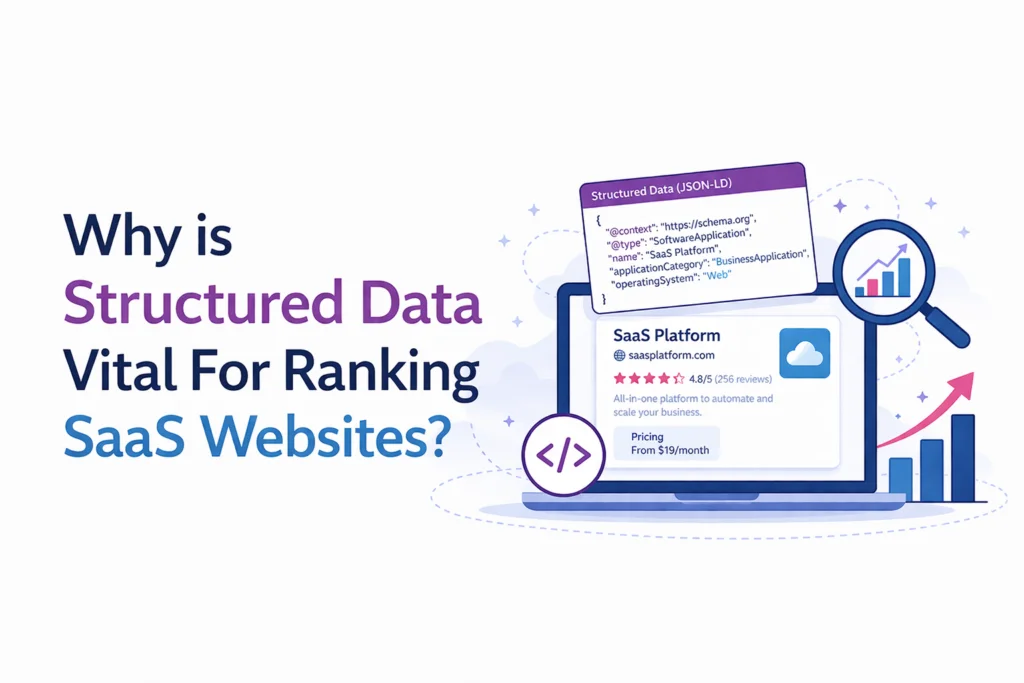
Most technical SEO for SaaS experts point to JSON-LD as best practice. JSON-LD is JavaScript Object Notation for linked data. It is a script you add to your page header, and it never changes what users see. Bots see it, not people.
If a search engine spots that script, it gets clear clues. It knows that Cleveranks means an Organization and that SEO Tool means Software Application. It does not guess. You pass the answers straight to the teacher. With this clarity, search engines can index your page better.
Why is Structured Data Important for SaaS Websites?
SaaS websites fight unique battles. You do not sell shoes or t-shirts; you sell digital software, and most times, you offer subscriptions. The buyer journey takes longer, and there are lots of competitors. Standard SEO will not get you noticed.
Structured data fixes many of these roadblocks. It lets you display more product information in search results, which is huge for SaaS website optimization. A user sees your score, price, and software type before clicking, giving you a more qualified lead.
Addressing the Trust Gap
Online trust is tough to earn. Buyers judge new tools with care and they want proof that your product works. Structured data helps a lot. It now marks up reviews and user ratings to provide social proof.
A study by Solid Digital backs this idea. Companies like Nestlé saw a 82% increase in CTR with rich results in search. Yes, Nestlé is a consumer brand, but the lesson fits SaaS too. If your result stands out visually, you get more clicks. Clicks offer chances for sales.
Skip schema markup for SaaS, and you risk losing ground. Your competition likely uses schema already. If they show five stars and you do not, users skip over your blue link.
Types of Structured Data Relevant to SaaS Websites
Do not try every schema. That is a waste. Instead, pick the ones that matter most for SaaS. The types below give the best results.
SoftwareApplication Schema
This one is most important for SaaS because it lets Google know your page is about an app. You can define key features for users.
- Application Category – Is it BusinessApplication or MultimediaApplication?
- Operating System – Runs on Windows, iOS, or is it web-based?
- Offers – Lists pricing and free-trial options.
- Aggregate Rating – Shows the average user score.
Use schema markup for SaaS, and pick the software application schema. Google sees you make tech.
FAQPage Schema
SaaS is complex, and people have questions. You probably wrote an FAQ on a feature or pricing page, so mark it up. The FAQPage schema brings your questions and answers into search results.
You get more space in the search results, which pushes down rival sites. Users get answers to objections early, helping build your authority fast.
Product Schema
SoftwareApplication is best for the main app page. Product schema covers tiers or plans. Use it to show features for a subscription plan.
Organization Schema
Do not forget this. The organization schema helps Google understand who you are. It links your website, logo, social pages, and contact info. It also helps with Knowledge Graph listings.
| Schema Type | Best Use Case | Key Benefit |
| SoftwareApplication | Homepage or App Landing Page | Shows app type, OS details |
| FAQPage | Features or Pricing Pages | Grabs more search real estate |
| Review | Testimonials Page | Trusted star ratings |
| Organization | Homepage | Links the brand entity and social pages |
How Structured Data Enhances Search Engine Visibility
You want to get noticed. That is the goal for SaaS SEO strategies. Structured data helps power rich snippets, which appear at the top of Google.
The Power of Rich Snippets
Normal search results have a basic title, link, and summary. Rich snippets show images, stars, and even pricing. Sometimes, extra features too. These grab the user’s eye.
John Mueller from Google often talks about clarity. He says structured data does not boost rankings directly, but says it helps the system. He put it like this. We use structured data to better understand the page’s content and context.
When bots understand better, they index better. Tighter indexing helps you rank on the right searches.
Improving Click Through Rates – CTR
Ranking alone will not win. You need clicks. SaaS website optimization means nothing unless people visit your site. Rich snippets boost your click rates.
A listing with good info looks more useful. People are more likely to click. Google tracks clicks, and more clicks mean you look relevant. This may lift your ranking again. That is a feedback loop.
Think about intent. If someone looks up the best project management software, they compare options. Your search results show “Free Trial Available” or 4.9 Stars right in the results. You are now the clear winner.
Implementing Structured Data on Your SaaS Website
You might worry it sounds tough or very technical. That is not always so. You can make technical SEO for SaaS changes using simple tools.
Step 1 – Audit Your Current State
First, check if you have a working schema. Use Google Rich Results Test. Add your URL and get results. See what structured data appears, if any, and if it works.
Step 2 – Generate the JSON-LD Code
You do not need to code by hand. Try a schema generator tool.
- Pick a schema type, such as SoftwareApplication.
- Enter details: name, image, price, OS.
- Copy the generated script.
Step 3 – Insert Code into Your Website
There are options:
- Direct in HTML – Place the script in the head of each page.
- Google Tag Manager – Use a custom HTML tag on any page.
- CMS Plugins – WordPress or Webflow plugins do the work.
Step 4 – Validate
Return to Rich Results Test. Add your script or page link. Errors? Fix them. Green means all clear.
Note on Dynamic Data
Big SaaS sites cannot do manual updates. You need a schema to use real product data. That way, when a price changes, the code auto-updates. This is what advanced SaaS SEO strategies need.
Common Mistakes to Avoid When Using Structured Data
Mistakes cost you. Bad data is worse than none. Google can penalize you for weak schema.
Marking Up Invisible Content
Never hide info in the schema only. If you label an FAQ in code, that same Q&A must also be on your page for human users. Hidden code breaks Google rules.
Using Incorrect Schema Types
Never call a blog post a Product, or label a service page as a Recipe. Be accurate. Schema markup for SaaS means you use SoftwareApplication for your app, Article for any blog post.
Ignoring Warnings
Google Search Console lists warnings and errors. Errors? Fix them fast, or rich snippets will not show. Warnings matter too, so fix if you can.
Self-Serving reviews
You cannot write fake reviews or mark up your own blurbs as user feedback. Only real reviews work in schema. Make sure reviews are public and user-posted.
How to Measure the Impact of Structured Data on SEO
You need to check your results. Good technical SEO for SaaS must deliver clear gains.
Google Search Console
This is the main tool here. Open the Enhancements tab.
- Shows all valid schemas
- Tracks rise in impressions and clicks from rich results.
- Let’s you track FAQ vs Review clicks
Google Analytics
Check organic site visits and focus on landing pages that have a schema. If your pricing page has SaaS Schema markup, check whether bounce rates drop or conversions climb.
Rank Tracking
Follow your search terms. Structured data does not boost rank right away. Still, a better CTR lifts your averages in 6 to 12 months. You might start showing in People Also Ask for top queries.
What Should You Do Next?
You know why schema matters. Now move. Structured data is easy, low-hanging fruit. Most SaaS rivals skip it. Get ahead now.
Start small. Use the Organization and SoftwareApplication schema on your site home page. Add the FAQ schema to your main blogs. Test and watch results.
If this all seems too much, relax. Technical SEO for SaaS is complex. You have a company to run. If you want an expert who knows SaaS inside and out, Cleveranks can be your best choice. They dig into the technical details so you can focus on other tasks.
Get on SaaS website optimization now. AI and rich answers are changing search every day. Schema is your ticket to better results in 2026 and beyond.
Key Takeaways
Before leaving, read the key takeaways from the article:
- Structured data lets search engines read your SaaS product clearly.
- It helps rich snippets show, which means more trust and clicks.
- SaaS SEO strategies need the SoftwareApplication and Review schema to work well.
- Always check your code so Google does not penalize you.
- Use Google Search Console to see what is working.
FAQs
What is the Best Schema Type for SaaS Websites?
The SoftwareApplication schema is best for SaaS website optimization. You tell Google your app system, the kind, and the price.
Does Structured Data Guarantee Rich Snippets?
No, it just makes you eligible. Google shows snippets based on search and site quality. If you skip Schema markup for SaaS, your page won’t appear as a rich result.
Can I Implement Structured Data Without a Developer?
Yes. Try Google Tag Manager or SEO plugins to add your JSON-LD. For advanced technical SEO in SaaS, work with a pro so you don’t scale errors.

