

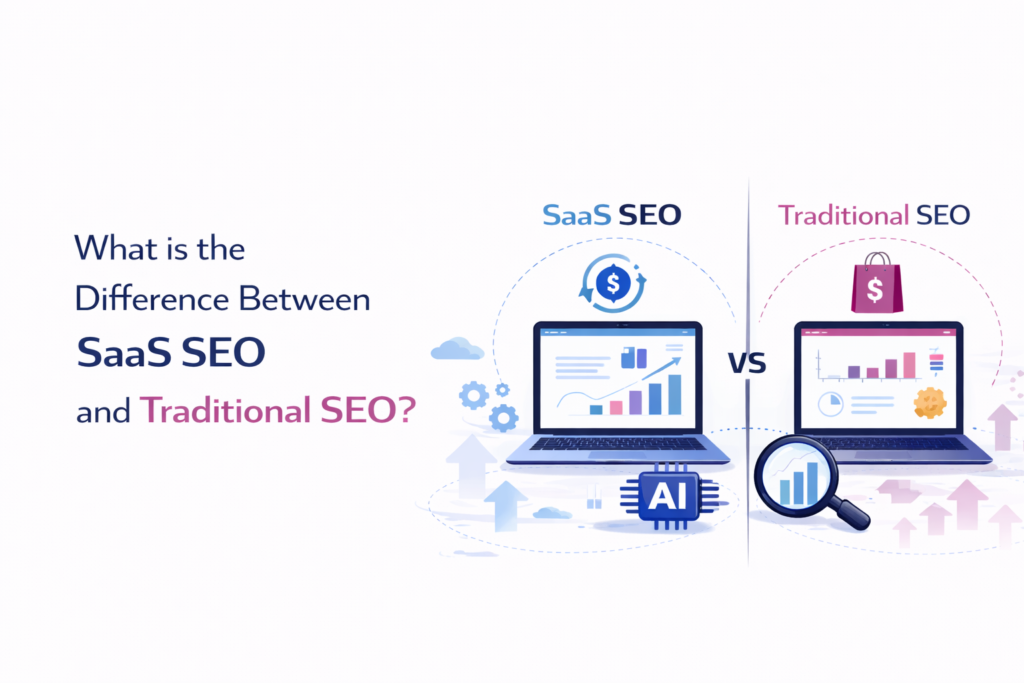
Search Engine Optimization helps people find you online. It is a vital tool for any business looking to grow. But not all SEO is the same. The methods you use for a local coffee shop are very different from the ones needed for a software as a service company. Trying to apply a one size fits all strategy can mean wasted time and money. This is especially true for SaaS businesses where the goal is not just a single sale but a long term customer relationship.
This guide will explain the key differences between SaaS SEO strategies and traditional SEO techniques. We will look at how the customer journey content and goals change between these two models. Understanding these distinctions will help you build an SEO plan that supports sustainable growth for your software company.
What is SaaS SEO?
SaaS SEO is a specialized approach to search engine optimization designed for businesses that sell software on a subscription basis. This model is all about building a steady stream of recurring revenue. Instead of focusing on a single purchase SaaS SEO strategies aim to attract and retain long term customers. The primary goal is to increase metrics like monthly recurring revenue (MRR) and customer lifetime value (LTV) while keeping the customer acquisition cost (CAC) low.
This means the entire SEO process is geared towards building relationships. You are not just selling a product, you are providing a solution that becomes part of your customer’s daily workflow. This requires a deep understanding of the user’s problems and a commitment to providing value at every stage of their journey.
What is Traditional SEO?
Traditional SEO techniques are typically used for business models focused on one time transactions. Think about e-commerce stores, local businesses or affiliate websites. The main objective is to drive an immediate action, such as a product purchase, a phone call or a store visit.
The customer journey is often shorter and more direct. For example, someone looking for new shoes will search for them, read a few reviews, and make a purchase all within a short period. The focus of traditional SEO techniques is on capturing users who are ready to buy right now. Success is measured by direct sales and immediate revenue.
Key Differences Between SaaS SEO and Traditional SEO
Understanding the fundamental differences between SaaS SEO strategies and traditional methods is the first step toward building a successful plan. These differences affect everything from your keyword choices to your content creation and how you measure success.
Customer Journey
The path a customer takes is a major point of difference.
- Traditional SEO: The journey is often short and transactional. A customer identifies a need, searches for a product, and makes a purchase. The decision is usually made by one person with low financial risk.
- SaaS SEO: The journey is long and complex. It involves multiple stages and often multiple decision makers. A potential customer might first become aware of a problem, then research different types of solutions, and finally evaluate specific products before making a choice. This process can take weeks or even months.
Keyword Strategy
Because the customer journeys are so different, the keyword strategies must also be different.
- Traditional SEO techniques often target “money” keywords with high commercial intent. These are phrases like “buy running shoes online” that show a user is ready to make a purchase. The focus is heavily on the bottom of the sales funnel.
- SaaS SEO strategies require a full funnel approach. You need to target keywords at every stage of the customer’s journey. This includes problem aware keywords for users just starting their research and solution aware keywords for those comparing different options. For instance, targeting a keyword like “how to improve team collaboration” can attract users who are not yet aware that your project management software exists.
Content Strategy
The type of content you create is directly influenced by your keyword strategy and customer journey.
- Traditional SEO: Content is often product focused. Product pages and category pages are the most important assets for an e-commerce site. The goal is to describe a product and convince someone to buy it.
- SaaS SEO: Content is educational and problem solving. A strong SaaS content marketing plan creates an ecosystem of information that helps users. This includes in-depth blog posts, comparison pages, case studies and detailed guides. According to a 2023 report by the Content Marketing Institute, 73% of B2B marketers use case studies as part of their content strategy, showcasing their effectiveness in building trust. Your content should position your company as an expert in your field.
Conversion Metrics
How you define a conversion is another significant difference.
- Traditional SEO: The primary conversion is almost always a direct sale. Success is easy to measure.
- SaaS SEO: The primary conversion is often a micro conversion like a free trial sign up or a demo request. These actions move a lead further down the sales funnel. Tracking the return on investment for subscription-based SEO is more complex and requires sophisticated attribution models to connect initial touchpoints to an eventual sale.
| Feature | SaaS SEO | Traditional SEO |
| Main Goal | Long term subscribers (MRR) | One time sales or leads |
| Customer Journey | Long complex, multi stage | Short linear transactional |
| Keyword Focus | Full funnel (problem and solution aware) | Bottom of funnel (commercial intent) |
| Content Focus | Educational ecosystem (blogs, guides) | Product and category pages |
| Key Metrics | Trials demos LTV CAC | Sales revenue ROAS |
Why SaaS SEO Requires a Unique Approach
SaaS companies face unique challenges that make a specialized SEO approach necessary. The longer sales cycles mean you need to keep potential customers engaged over an extended period. This requires a steady stream of high quality educational content that addresses their evolving needs. The complexity of software products often means you need to educate users on not just what your product does but how it solves their specific problems.
As Ahrefs’ CMO Tim Soulo says, “It’s not the job of the SEO to get the CEO what they want. It’s the job of the SEO to get the CEO what they need.” For SEO for software companies, this means focusing on a strategy that builds a sustainable pipeline of qualified leads, not just chasing vanity metrics like traffic. Aligning your SEO efforts with your customer acquisition and retention goals is critical for long term success. You need a strategy that understands the nuances of subscription-based SEO and the importance of nurturing leads through a complex buying process.
How to Optimize SaaS SEO for Better Results
Improving your SEO for software companies involves a strategic and multi faceted approach. It goes beyond simple keyword targeting and requires a deep commitment to providing value to your audience.
Create a Comprehensive Keyword Strategy
Your keyword strategy needs to cover the entire sales funnel.
- Top of Funnel: Target informational keywords that address your audience’s pain points. These are often question based like “what is customer relationship management”.
- Middle of Funnel: Focus on keywords that users search for when comparing solutions. This includes “best CRM for small business” or “[competitor] alternative” keywords.
- Bottom of Funnel: Target high intent keywords that show a user is ready to convert. These include branded terms like “[your brand] pricing” or “demo of [your brand]”.
Build an Educational Content Hub
Your SaaS content marketing should be the core of your SEO efforts.
- Blog Posts – Write detailed articles that answer your audience’s questions.
- Comparison Pages – Create pages that directly compare your product to your competitors. These are often high converting pages.
- Case Studies – Show how real customers have found success with your product.
- Free Tools – Develop simple tools like calculators or templates that provide value and attract backlinks. A recent HubSpot report found that companies that blog get 97% more links to their websites.
Leverage Technical SEO
Technical SEO is especially important for software companies.
- JavaScript – Many SaaS platforms are built with JavaScript. Ensure that search engines can crawl and index your content properly.
- Site Speed – A fast loading website provides a better user experience and is a known ranking factor.
- Documentation – Your help docs and knowledge base can be a goldmine for long tail keywords. Optimize them for search to capture users looking for specific solutions.
Which SEO Strategy is Right for Your Business?
Choosing the right SEO strategy depends on your business model. If you sell a product or service with a one time transaction traditional SEO techniques will likely be the most effective. Your focus will be on driving immediate sales through commercial intent keywords and product focused content.
If you run a subscription based business then a dedicated SaaS SEO strategy is essential. Your goal is to build a long term relationship with your customers so your SEO efforts must reflect that. This means a full funnel approach with a strong emphasis on educational content and micro conversions. In some cases, a hybrid approach may be beneficial. For example, a SaaS company might use traditional local SEO tactics to target customers in a specific geographic area while also employing a broader SaaS content marketing strategy.
What Should You Do Next?
For SaaS businesses looking to improve their online visibility, the next steps are clear. Start by mapping out your customer journey to understand the questions and challenges your audience faces at each stage. Then build a content plan that provides the answers and solutions they need. Focus on creating high quality educational content that establishes your brand as a trusted authority. For those looking for expert guidance, a specialized agency like Cleveranks can be your best choice to navigate the complexities of subscription-based SEO.
It is also important to continuously monitor your performance and adapt your strategy. SEO is not a set it and forget it activity. Market trends change and your competitors are always evolving. Regularly analyze your data, make adjustments, and stay focused on providing value to your users. By embracing the unique demands of SaaS SEO strategies, you can build a powerful engine for sustainable growth.
Key Takeaways
Before leaving, read the key takeaways from the article:
- SaaS SEO is for long-term customer relationships and recurring revenue. Traditional SEO targets immediate one-time sales.
- A successful SaaS SEO strategy requires a full funnel approach with educational content technical optimization and a focus on micro conversions like free trials.
- Businesses should choose their SEO strategy based on their specific goals audience and product.
FAQs
What Are the Main Goals of SaaS SEO?
The main goals of SaaS SEO are to acquire long term subscribers, increase monthly recurring revenue (MRR) and reduce the customer acquisition cost (CAC). It is about building a sustainable growth model.
How Does Content Strategy Differ in SaaS SEO?
SaaS content marketing focuses on educational and problem solving content. It aims to guide users through a long sales funnel by providing value at every stage rather than just pushing for an immediate sale.
Which is Better: SaaS SEO or Traditional SEO?
Neither is better than the other. The right choice depends on your business model. SaaS SEO is designed for subscription businesses, while traditional SEO is better suited for transactional businesses.

